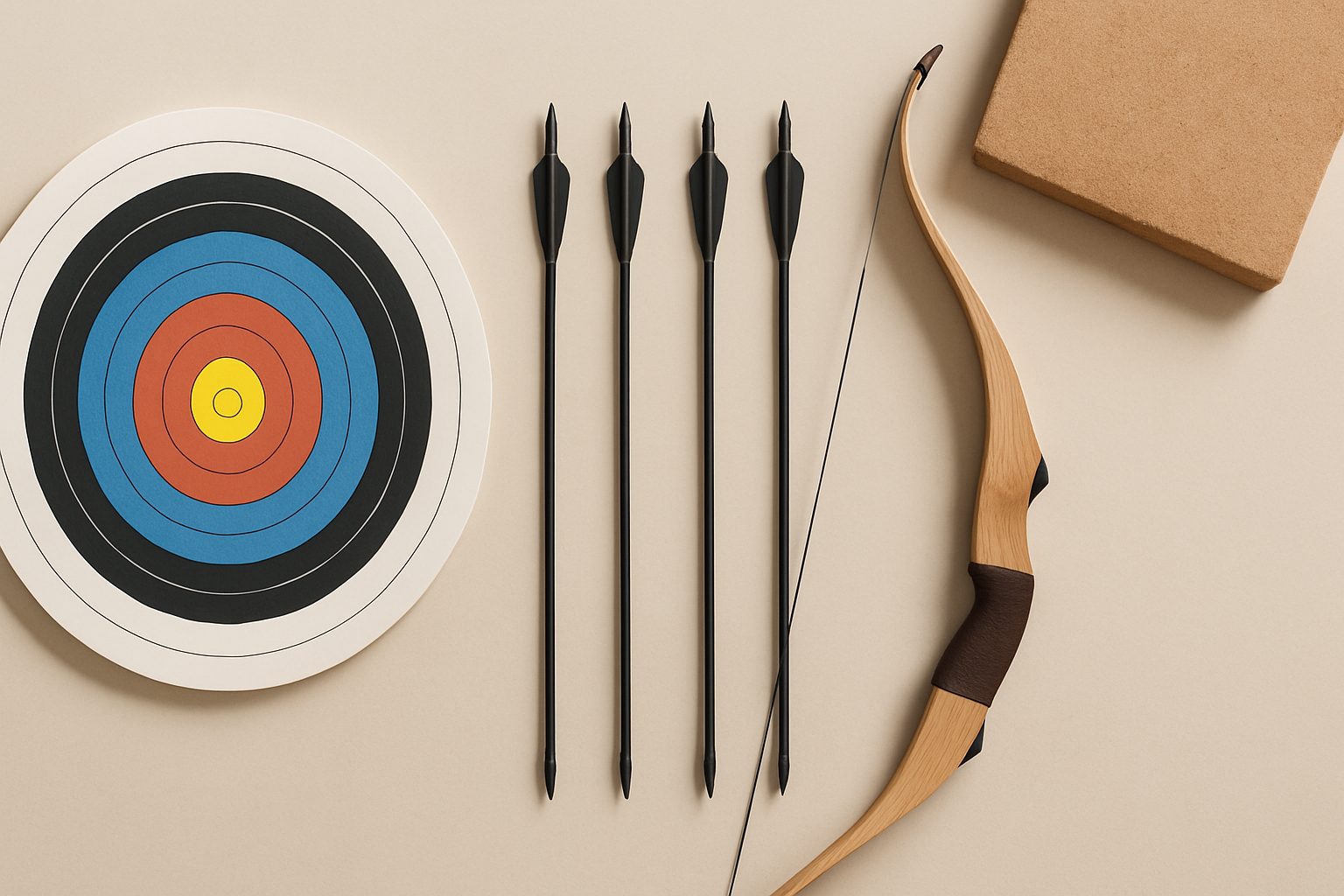
Home Archery Range Ideas for Small Gardens UK (10 m to 20 m)
Setting up an archery range in a modest garden is entirely feasible if you plan the layout carefully. A 10–20 metre space is genuinely usable for archery practice—it won't give you the full 30–50 metre distances that competitive archers need, but it's sufficient for skill development and recreational shooting. The key is understanding your safety constraints and choosing equipment that suits your actual space, rather than trying to squeeze full-sized setups into a corner.
Assessing Your Garden and Safety Requirements
Before designing anything, measure your available shooting distance and check what lies beyond your property boundary. You need a clear, unobstructed line of sight from shooting position to target, plus a proper backstop zone behind it. The archery safety rule is straightforward: never shoot where you can't see the target or control the arrow's stopping point.
For a 10–20 metre range, allow roughly 1.5–2 metres behind your target for a safe backstop. This means a 10 metre shooting distance actually requires 11.5–12 metres of usable garden depth. If your space is tighter, you'll need to shoot from closer in—shooting at 8 metres into a proper backstop is still valid practice, just shorter range.
Check side boundaries too. Arrows won't travel sideways from a correctly aimed shot, but stray shots happen, especially when learning. A garden bounded by fences or hedges on both sides is safer than one overlooking neighbours' properties. If you have concerns about neighbour relations, have that conversation before building anything. A simple explanation of what you're doing and where the arrows go—backstopped safely within your property—often reassures people who might otherwise assume the worst.
Layout Options for Tight Spaces
The most common mistake is trying to shoot the full length of your garden end-to-end. Instead, position your shooting line near the house or a side boundary, shooting across or along the length of the garden. This gives you flexibility with actual distance.
The side-shooting layout: If your garden runs 15 metres but is only 8 metres wide, shoot along its length. Your shooting stance occupies about 1.5 metres; your target and backstop take another 1.5–2 metres. That leaves 11–13 metres of shooting distance. Mark a clear shooting line with tape or paint so everyone knows the zone is active when you're using it.
The corner setup: Position the target in one corner, 10–15 metres away, with your shooting line against the opposite boundary. This works well for L-shaped gardens or where one corner has better backstopping than others (for instance, if a brick wall runs along one edge).
The portable approach: Use a lightweight stand and a separate backstop system you can reposition. This suits gardens where you might only shoot occasionally, or where garden layout changes seasonally. A 60 cm × 60 cm portable target stand with a pellet-stop face can sit safely in multiple spots, and you shoot from marked positions nearby.
Equipment for Small-Space Archery
Garden archery's first decision is bow choice. Full-weight compounds (30–70 lbs draw weight) are more forgiving at distance but demand consistent form—and on short ranges, they're harder to control. Recurve bows with lower draw weights (16–28 lbs) suit gardens better. They're more forgiving of imperfect technique at close range, and the lighter draw weight reduces fatigue if you're shooting for an hour.
For targets, invest in a proper target face on a foam backing or a specialist archery target core—not foam dartboard material or old mattresses. A quality foam target stops arrows cleanly and lets you pull them out without damage. Expect to spend £40–80 for a decent practice target that'll last years.
For backstops, options include:
- Wooden frame with canvas and straw: Build a simple 1.2 × 1.2 metre wooden frame, staple on canvas, and pack it with straw or shredded paper. Arrows embed safely, and you can refresh the infill yearly.
- Specialist backstop panels: Pre-made layered foam or ballistic netting panels designed for archery. Pricier but permanent and maintenance-free.
- Natural boundaries: A dense hedge can work if it's at least a metre thick. Test first with a few arrows to confirm arrows don't punch through.
Position your target at eye height when standing. This is safer—arrows won't bury into soft ground beneath or deflect unpredictably—and ergonomically better for form work.
Setup and Practicalities
Mark your shooting line clearly. Tape on the ground works, but a small wooden shooting line (a 30 cm piece of 5×5 cm timber) is more permanent and keeps feet aligned session to session. Position it at least 1.5 metres from any structures or fences.
Create a designated "range active" signal visible from house windows—a bright flag or sign you put out when shooting is underway. This stops family members or friends wandering into the live fire zone unexpectedly.
Store arrows safely—a quiver or a PVC pipe stand by the shooting line, not scattered about. Keep the bow in a garage or shed rather than exposed to rain and UV, which degrades limbs over time.
What Works, What Doesn't
Shooting in the dark or twilight is genuinely unsafe, even in your own garden—you can't see whether someone has entered your space, and target aiming becomes guesswork. Confine practice to good daylight.
Shooting into walls or solid fences is risky. Arrows bounce unpredictably off hard surfaces. Even one errant bounce can leave a blind spot in your garden. Always shoot into a soft, absorptive target and backstop.
Don't share your range with moving targets or anything requiring quick reflexes from others. This isn't a space for children playing at the far end or pets wandering through. It's active when you're shooting, inactive otherwise.
A 10–20 metre garden archery range genuinely works for skill building, fitness, and enjoyment. Respect the safety basics, choose equipment suited to short distances, and you'll have a functional practice space that requires minimal fuss and cost.
More options
- Garden Archery Targets (Amazon UK)
- Archery Backstop & Safety Netting (Amazon UK)
- Archery Target Stands (Amazon UK)
- Recurve & Compound Bows for Home Use (Amazon UK)
- Carbon & Fibreglass Arrow Sets (Amazon UK)