How to Set Up a Home Archery Range in the UK: The Complete Guide
Setting up an archery range at home offers convenience, privacy, and the chance to practise regularly without travel. But it's not as simple as setting up targets in your garden. UK regulations, safety protocols, and practical constraints mean you'll need to plan carefully. This guide walks you through everything you need to know.
Legal Considerations and Planning Permission
Before you buy a single piece of equipment, check your local planning regulations. Most UK councils don't require planning permission for a domestic archery range, but some areas have specific restrictions, particularly if you're in a conservation area or near listed buildings. Contact your local planning authority to confirm.
You'll also need to consider your neighbours. Archery isn't inherently loud, but stray arrows and the general disturbance of regular practice can create friction. Some councils require you to demonstrate that neighbours have been consulted, especially if your property backs onto other gardens. Start that conversation early—a poorly managed range can lead to enforcement action or disputes that undermine your whole project.
Verify your insurance covers your archery activities. Standard home insurance often doesn't, so speak to your provider or look into specialist coverage.
Space and Distance Requirements
You need realistic space. The minimum practical setup for target shooting requires at least 30 metres of clear distance. Olympic competition distances run to 70 metres, but most recreational archers work within 20–40 metres. If you have less than 20 metres, your progress will feel limited.
Beyond distance, plan the width of your shooting area. A standard target is 80 centimetres wide, but allow extra space either side for wayward arrows—at least a metre of buffer on each flank. Behind the targets, you'll need a safe backdrop. A clear wall, dense hedge, or dedicated netting stops arrows from leaving your property.
The shooting platform itself needs to be level and stable. Uneven ground throws off your sight picture and makes scoring practice uncomfortable.
Safety: The Non-Negotiable Foundation
Archery is safe when managed properly, but corners cut here create real hazards. Establish clear rules:
- Only authorised people shoot. Children need supervision; minors typically need instruction from an approved coach or parent trained in safety.
- Never shoot toward buildings, roads, or where people might be. Always check your backstop and wider environment before drawing.
- Use audible signals. Call "Line clear!" before anyone shoots, and establish a retrieval procedure where only one person collects arrows at a time, always flagged to active shooters.
- Wear appropriate kit. Arm guards prevent string slap; finger tabs or gloves protect your fingers. Eye protection isn't required but many consider it sensible.
- Keep bow maintenance standards high. A failing limb or cracked bow creates injury risk.
Essential Equipment
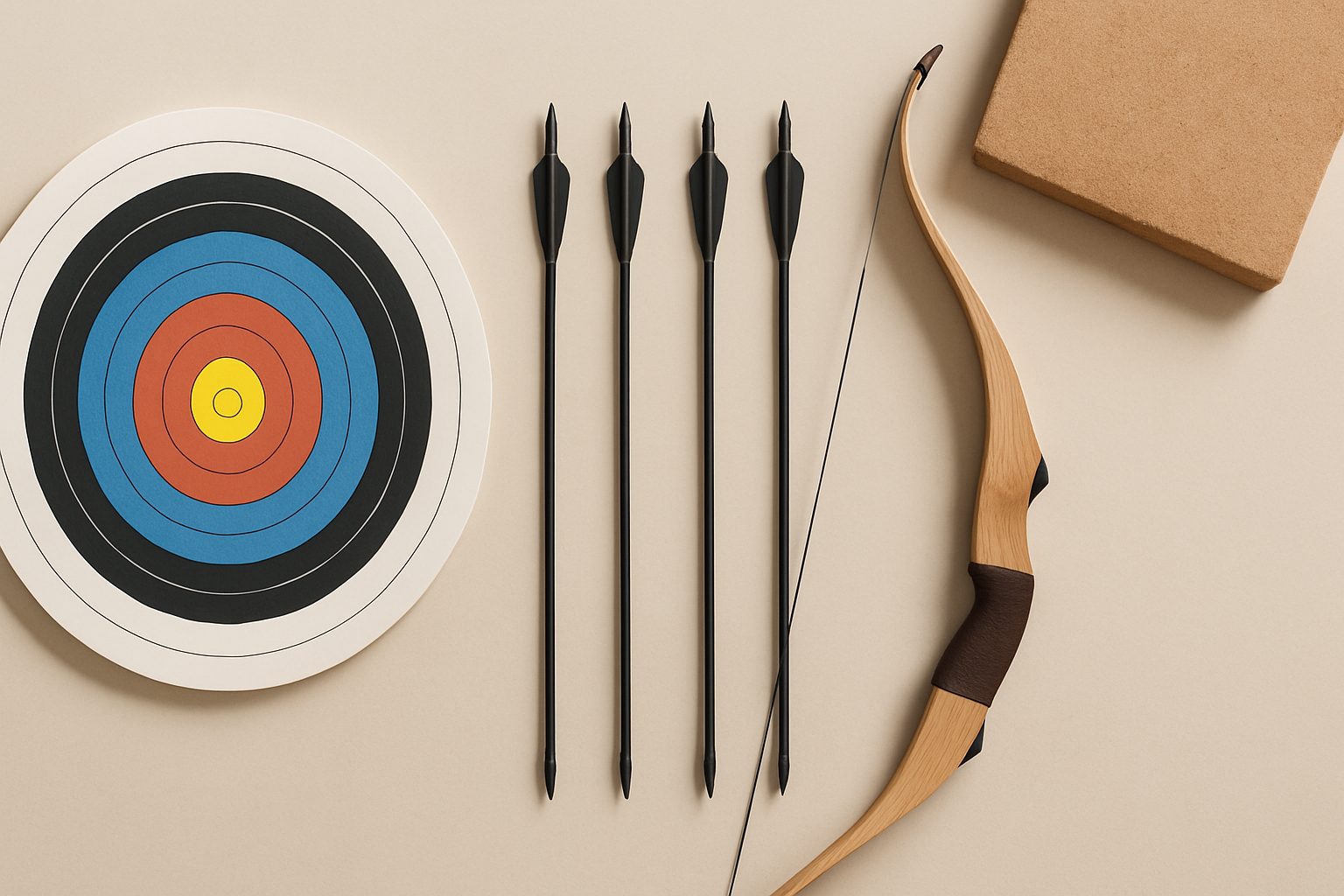
Targets and Stands A quality target butt stops arrows reliably and resists weathering. Foam targets (such as 3D animal targets or traditional rectangular butts) are popular for home use. Pair your target with a sturdy stand that won't topple or slide. Height should adjust to eye level when you're at full draw—typically around 140 centimetres to the centre.
Netting and Barriers Safety netting behind and to the sides prevents arrows escaping your property. Black netting 20–30 millimetres in gauge suits most setups. It needs to be taut and secure; loose netting can trip the arrow in unpredictable ways. Budget for posts or frames to hold it properly.
Bows Your bow choice depends on your experience and goals. Recurve bows (the Olympic style) are versatile and relatively forgiving for beginners. Compound bows pack more power and forgive small technique errors, but they cost more and need specialist tuning. Longbows suit a minority of dedicated enthusiasts. Rent or borrow before buying if you're unsure.
Arrows, Armguards and Accessories Match arrow spine (stiffness) to your bow and draw weight. Wrong spine causes wild flight and makes grouping impossible. Add a armguard, finger tab, and nocking loop. A simple quiver holds arrows safely at hand.
Setting Up Your Range
Start with a clear, level shooting area. Mark your standing position with tape or a mat. Set up your target at a distance that challenges but doesn't frustrate you—most beginners start at 10–15 metres indoors or 15–20 metres outdoors.
Position netting securely behind and to the flanks. Check sight lines multiple times: stand where arrows land and look back toward your shooting position, confirming nothing beyond the netting is at risk. Do this in daylight and account for evening shadows or winter low sun that might create blind spots.
Install your target stand on flat ground where it won't shift. Check it's level and stable before drawing even once. A wobbly target ruins consistency and wastes practice time.
Maintenance and Ongoing Use
Weather degrades equipment. Check netting regularly for tears. Target butts compress over time; replace them when they stop gripping arrows properly. Store bows indoors in a stable environment—humidity and temperature swings damage limbs and strings.
Keep records of practice. Scoring your rounds (especially at fixed distances) tracks progress and identifies technique issues. Practice isn't just about loosing arrows; deliberate, measured practice builds skill.
The Reality Check
A good home range takes time and modest investment to set up properly. The payoff is substantial: regular, low-pressure practice; freedom to shoot in your own time; and the satisfaction of continuous improvement. But shortcuts—skimped safety measures, poor netting, or inadequate space—create real risks and often cost more to fix than doing it right initially.
Plan carefully, consult your council if needed, talk to your neighbours, and invest in decent equipment. A well-managed home range becomes a rewarding long-term asset.
More options
- Garden Archery Targets (Amazon UK)
- Archery Backstop & Safety Netting (Amazon UK)
- Archery Target Stands (Amazon UK)
- Recurve & Compound Bows for Home Use (Amazon UK)
- Carbon & Fibreglass Arrow Sets (Amazon UK)